
Teachers’ lounge
🏆 1st Place Prize at the University of Michigan School of Information Exposition ‘26, in the category of Life-changing Education.
Teachers’ Lounge is an application where teachers help teachers. It meets teachers where they are in an always-accessible digital community designed to facilitate mentorship among K–12 educators in a way that is supportive, collaborative, and approachable.
Tools:
Figma and Figjam
Duration:
3.5 months (2026)
Contributions:
Domain over discover page, mentorship matching, library, and profile creation.
Collaborators:
2 UX Researchers and 1 UX Designer
Problem Statement
44% of new teachers exit the profession within 5 years. How might we facilitate informal mentorship for early career K-12 teachers to increase retention and job satisfaction in the field?
Challenge & Goals
While systemic issues such as compensation, policy, and institutional support play a central role, these factors are often slow to change and outside the scope of individual schools or designers to address directly.
This project is motivated by the need to understand and alleviate the daily, compounding burdens that contribute to burnout, diminished job satisfaction, and ultimately attrition which newly graduated K–12 teachers experience. Rather than attempting to solve structural problems embedded in the education system, this project seeks to identify specific, high-friction pain points in early-career teaching that may be meaningfully supported through intentional technical interventions.
research methods
For our research, we conducted a preliminary literature review to understand the problem scope, a digital ethnography to comprehend teacher sentiment in their profession, interviews from early career and experienced teachers, a MaxDiff survey to prioritize features, and usability testing to gather feedback on the product.
Key findings

Teacher Burnout Driven by Administrative Burden, Classroom Behavior, Lack of Support, and Mental Health
Teacher burnout is not just about workload. It is driven by administrative misalignment, lack of support, and isolation. Administration plays a key role in defining the school environment and teacher experience.
“I felt very lucky that the principal I worked under was absolutely amazing. Leadership makes a huge difference. It creates the whole community, from adults down to children.” – P11, over 20 years teaching”
Early Career Teachers Need More Support
Current gaps in mentorship include preparation and support in the first few months of teaching and guidance in lessening administrative burden.
“Balancing learning curriculum, learning how to teach, and learning classroom management all at once was overwhelming.” – P8, former teacher


Positive Mentoring Relationships Are Impactful
Environments that foster positive mentoring relationships and improve well-being for teachers are supportive, collaborative, and approachable.
“There were just teachers who saw me...as a brand new 23-year-old person who needed help and guidance, and so they did it because…teachers inherently recognize that, and they reach out to fill that need.”
– P9, retired after over 20 years teaching
design concept: a Novel social network
No social network or centralized hub is currently dedicated to serving teachers. This creates a clear opportunity to build a digital community where educators can: seek advice, share experiences, find resources, and build meaningful connections. Teachers’ Lounge is exclusive to only teachers where they can have transparent communication with one another.
Core Platform Needs & Design Requirements:
Center platform interaction around advice, support, and accessible resources
Engagement-based peer matching, experience-based mentor/mentee matching
Develop community guidelines around respect, professionalism, and confidentiality
Facilitating Conversation
The Threads page serves as a public hub where the user’s experience is customized through interests they selected during the onboarding process. The user can peruse the threads of these selected topics through the scrollable navigation at the top of the page, or explore the mixed personalized topics in "My Feed".
While creating a post, we included the option of posting anonymously, so the platform provides a safe outlet for teachers to seek advice on sensitive matters (such as burnout or administrative friction) without the risk of professional exposure.
Discovering Resources & Mentor Matching
The main goal of our platform is to foster community but also to provide mentorship. Mentorship is not one size fits all and we designed our platform to represent the various needs of our teacher population. On the Discover page you will find resources such as lesson plans, highlighted podcast episodes, and trending discussion posts.
In the Grow Your Lounge, users will find opportunities to connect with teachers who are recommended to them based on their years of experience and credentials, recommended peers based on engagement on the platform, recommended mentors who have similar years of experience, mentees who are looking for someone more senior to connect with, and finally teachers near you based on location.
Organized Library
The Library is where our users will find their saved resources from the Discover page along with posts from the Threads page. Additionally, in the Library there is filtering based on the type of resource such as lesson plans, activities, and posts. Another section of our Library is the Boards where teachers can organize their different saved resources into folders.
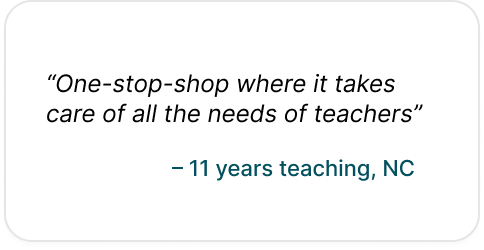
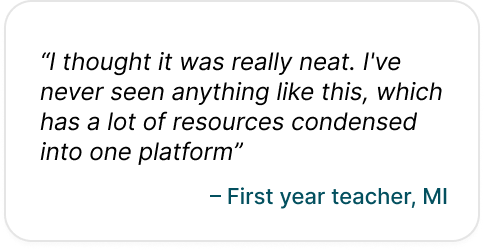
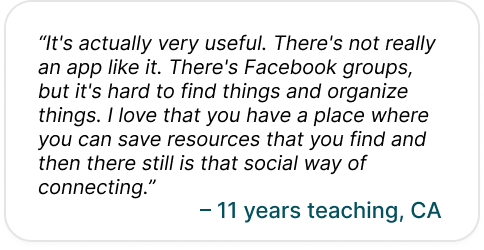
impact: what teachers are saying
Next Steps & Reflection
The next step in our teams journey includes technical feasibility. We want to:
Build a secure database to support user profiles, contextual personalization, and mentorship matching.
Design for iOS, Android, and web to ensure accessibility and flexibility across teacher workflows.
Implement strong data protections, user verification, and clear privacy controls to support safe engagement.
Develop an initial, functional prototype, leveraging vibe coding tools such as Claude Code and Figma MCP for rapid iteration.
Credit: Kate Lilly, Nithya Duggaraju, and Ilana Mermelstein